
Ensure Your Business is Financially Ready for the New Year
As the year winds down, the financial picture of any organization becomes clearer. This is the ideal time to tidy up records, confirm accuracy, and set the stage for smarter decisions in the year ahead. A thoughtful year-end bookkeeping process not only supports compliance but also helps uncover savings, prevent cash flow issues, and highlight growth opportunities.
10 Tips for Year-End Bookkeeping Prep
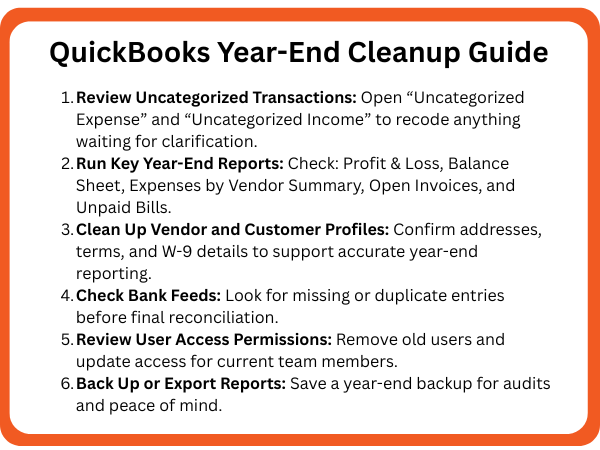
Below is a practical checklist to guide your wrap-up.
Download the supplemental “Year-End Bookkeeping Checklist.”
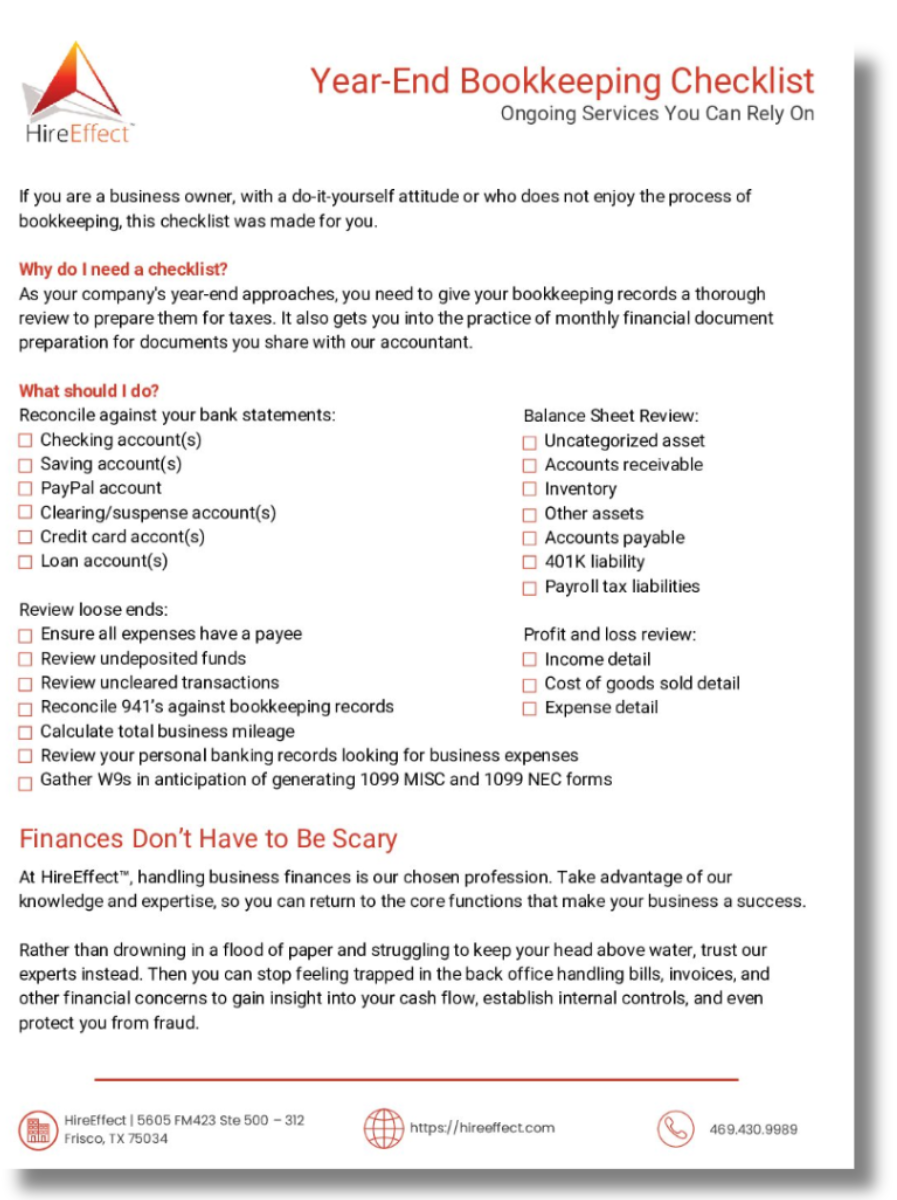
Below is a practical checklist to guide your wrap-up.
1. Reconcile All Bank, Credit Card, and Loan Accounts
Confirm that every statement is reconciled through the final month of the year. Unmatched transactions, especially small ones, can distort margins and hide errors.
2. Review Outstanding Invoices and Collections
Check for unpaid invoices, follow up on aging accounts, and write off debts that are no longer collectible. This improves accuracy and tightens cash projections going into January.
3. Verify Vendor Information and Open Bills
Ensure vendor profiles, W-9s, and payment terms are up to date. Close out or correct lingering open bills so expenses are correctly reflected. Updated data supports smoother 1099 preparation and fewer surprises during tax season.
4. Update Payroll and Contractor Records
Confirm wages, bonuses, reimbursements, and benefits are correctly recorded. Double-check contractor payments to ensure year-end forms (including 1099-NECs) can be issued accurately.
5. Categorize All Expenses Correctly
Spend a few minutes scanning for expenses that landed in “uncategorized” buckets. Clear labeling strengthens financial reporting and gives your accountant the details needed to identify deductions you may not realize you qualify for.
6. Review Fixed Asset Purchases and Depreciation
Gather receipts and records for equipment, vehicles, and significant technology purchases. Updating depreciation schedules now supports accurate tax filings and clarifies what can be expensed versus depreciated.
7. Analyze Profit & Loss and Balance Sheet Trends
Year-end reports reveal performance patterns: emerging expenses, overspending, or revenue segments worth expanding. Use these reports to set budgets and inform planning conversations.
| Report Name | Purpose |
| Profit & Loss (YTD) | Shows revenue, expenses, and margin trends |
| Balance Sheet | Provides a year-end snapshot of financial position |
| Profit & Loss by Month | Reveals seasonal patterns and unusual swings |
| Expense by Vendor Summary | Identifies overspending and vendor duplication |
| Revenue by Customer/Source | Highlights your strongest and weakest revenue areas |
| Statement of Cash Flows | Tracks how money moved in and out |
| General Ledger | Helps spot misclassifications and errors |
| Uncategorized Transactions Report | Identifies items needing classification |
| Aged Accounts Receivable (A/R) | Shows overdue invoices you may still collect |
| Aged Accounts Payable (A/P) | Confirms outstanding bills that need attention |
| Budget vs. Actual (optional) | Compares planned vs. actual spending |
| Sales by Product/Service (optional) | Highlights top-performing offerings |
8. Evaluate Cash Flow and Upcoming Obligations
Look ahead to early-year expenses, including insurance renewals, subscriptions, tax payments, and payroll cycles. Mapping cash needs helps avoid shortfalls and gives leadership confidence in planned investments.
9. Back Up and Secure Financial Data
Store secure, encrypted backups of accounting files, payroll reports, receipts, and year-end statements. This is also a good time to review user permissions and remove access for former employees.
10. Schedule a Year-End Review with Us
A final walkthrough ensures everything is aligned and ready for tax preparation. It’s also a chance to ask questions, refine your financial workflow, and identify areas where automation or professional support could lighten the load next year.
A Smooth Start Begins with a Clean Finish
Being intentional at year-end reduces stress, strengthens reporting, and positions your organization for a confident start to the new year. If you want help completing this checklist, organizing your records, or building a better bookkeeping system for 2025, HireEffect is here to support you.
You Might Also Like
- How to Avoid 7 Costly Year-End Bookkeeping Mistakes
- Outsource Year-End Bookkeeping to Avoid Trouble and Prepare for New-Year Success
- 5 Benefits to Kickstart Your Year-End Bookkeeping Early
- Year-End Bookkeeping Simplified: Essential Steps for Business Owners