

Moving Beyond Cash-Flow Projections, Budgets, & Predictive Analytics
If you’re relying on bookkeeping alone and recording what happened after the fact, you’re missing out on valuable insight. To scale effectively, you need to build forecasting habits that scale by moving beyond recordkeeping into cash flow projections, budgets, and predictive analytics to plan for growth rather than react to it.
Transform financial data into meaningful, forward-looking insights that support sustainable success.
Traditional Bookkeeping Isn’t Enough
Bookkeeping keeps your house in order. Forecasting builds the blueprint for growth. When you pair the two, your financial management evolves from reactive recordkeeping to proactive decision-making, helping you navigate uncertainty with confidence. Here’s why bookkeeping alone isn’t enough.
- You can’t manage what you can’t see ahead of time. Bookkeeping data shows whether you made a profit last month. But it doesn’t show if you’ll have enough cash to cover payroll next month or invest in growth next quarter. Without forecasts and cash-flow projections, you’re constantly reacting to what’s already occurred instead of steering your business toward what’s next.
- Growth brings complexity that static reports can’t capture. As your business expands, the timing gap between revenue and expenses widens. A spike in sales might look great on paper, but if customers pay 60 days later and your bills are due in 30, you’ll feel the strain. Forecasting bridges that gap, turning numbers into insights about when money moves, not just how much.
- Data without context can mislead decisions. Profit and loss statements can hide cash shortfalls or seasonal patterns. Without analytics, it’s easy to assume your business is healthy when it’s tight on cash. Forecasting surfaces those early warning signs, giving you time to adjust spending, pricing, or hiring before problems arise.
- Strategic planning requires more than compliance. Financial statements keep you compliant with the IRS and stakeholders. But scaling a company requires planning for new hires, equipment, or market expansion. Budgets and rolling forecasts transform static data into a strategic roadmap, helping you set goals, test scenarios, and measure progress over time.
What proactive financial habits look like.
These five simple financial habits are the foundation for smarter financial decisions that can differentiate a business from one that relies solely on bookkeeping.
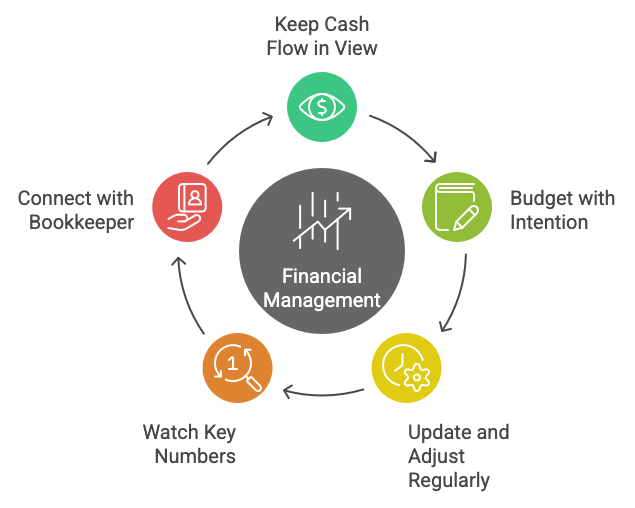
- Keep your cash flow in view: Forecasting what’s coming in and going out keeps you one step ahead. A simple monthly cash-flow projection helps you plan for slower periods and avoid surprise shortfalls.
- Budget with intention: A budget isn’t just a spreadsheet. It’s your business plan in numbers. Use it to focus resources where they matter most and make confident spending decisions.
- Update and adjust regularly: Markets shift, costs change, and goals evolve. Review your forecast often and test “what-if” situations so you can pivot quickly when needed.
- Watch the numbers that tell the story: Trends in receivables, expenses, or margins can signal what’s coming next. Keeping an eye on these patterns helps you act before issues grow.
- Connect forecasting with your bookkeeping partner: When your outsourced bookkeeping team helps manage both your books and your forecasts, your financial data becomes a tool for planning, not just reporting.
5 Habit-Building Steps
Building a proactive financial routine starts with small, consistent steps and the right partner to help you stay on track. Our team helps business owners like you move from reacting to financial surprises to planning with confidence.
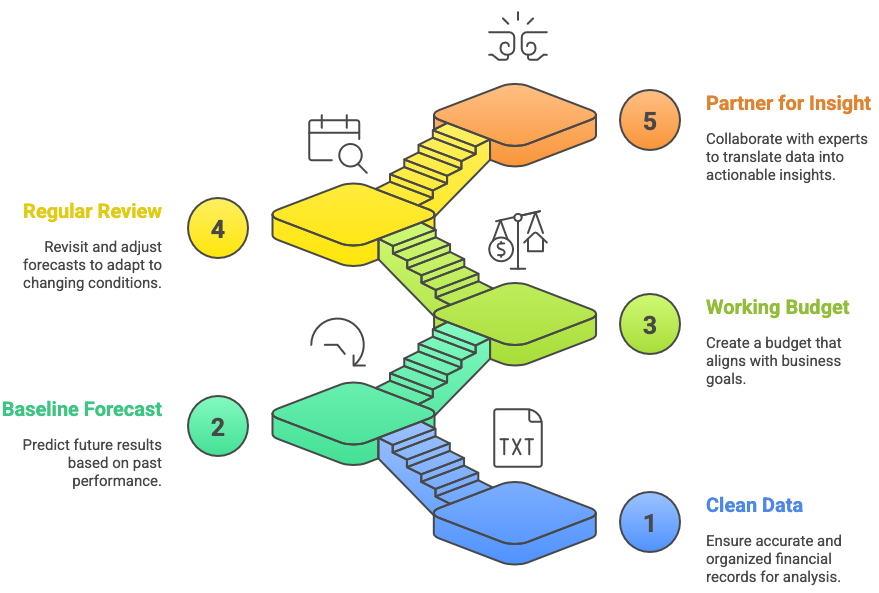
Step 1: Start with clean data.
Every solid forecast begins with accurate books. Our bookkeeping services ensure your financial records are organized, reconciled, and ready for meaningful analysis.
Step 2: Create a baseline forecast.
Once your books are clean, use past performance to predict future results. A simple 12-month forecast of revenue, expenses, and cash flow gives you a roadmap for decision-making and growth.
Step 3: Build a working budget.
Turn your forecast into a budget that reflects your business goals. A clear budget helps you stay disciplined, make strategic investments, and identify opportunities to cut costs or reallocate funds.
Step 4: Review and refine regularly.
Forecasts aren’t “set it and forget it.” Revisit your numbers each month or quarter, compare actual results to your plan, and adjust as conditions change.
Step 5: Partner for insight.
Working with an outsourced bookkeeping team like ours brings experience, tools, and perspective you may not have in-house. We help translate your data into actionable insights so that you can make smarter financial decisions faster.
5 Common pitfalls and how to avoid them.
Even the best plans can go off track if a few common mistakes creep in. Here’s what to watch for, and how to stay ahead of them.
- Overestimating growth: It’s easy to be optimistic, but projecting sales too high can lead to overspending and cash shortages. Use historical trends, not hopes, to shape your numbers.
- Treating the forecast as a one-time task: A forecast that sits untouched quickly becomes outdated. Review your numbers regularly and update them when new data or market changes occur.
- Confusing profit with cash flow: You can show a profit on paper and still run into a cash crunch. Focus on when money actually moves in and out of your business, not just your income statement.
- Ignoring the link between your budget and forecast: Budgets and forecasts work best together. Your budget sets the plan, while your forecast tracks progress and signals when adjustments are needed.
- Working in silos: When bookkeeping, forecasting, and strategy aren’t connected, insights get lost. Ensure your financial data is analyzed, understood, and applied to drive smarter decisions.
By avoiding these common mistakes, you can turn forecasting into one of your business’s most valuable growth tools.
It’s time to make the shift.
By combining bookkeeping, cash-flow projections, budgets, and predictive analytics, you’ll gain clarity, agility, and certainty.
HireEffect can help you build those habits, so your financial strategy works for your growth. Let’s build confidence in your financial future, together. Contact us today!