

Quick answer
Here’s the honest version most pricing guides skip: a fractional controller isn’t priced by the hour, and it shouldn’t be. Priced as a rough range, this kind of oversight runs a few thousand dollars a month, but that number tells you almost nothing on its own. The right question isn’t “what’s the hourly rate?” It’s “What is reliable financial oversight worth to my business?” That’s how good firms price it, and it’s how you should evaluate it. The real figure depends on the value at stake and the foundation it sits on. Your books have to be current and trustworthy before oversight can do anything for you. Get that right, and the controller layer earns its keep many times over. Here’s how the pricing actually works, why value beats the hourly meter, and how to buy it so it pays off.
What a fractional controller is (and the standalone myth)
A fractional controller is a senior finance professional who provides financial oversight on a part-time or shared basis instead of as a full-time hire. It’s the same role as an in-house controller, meaning the output is reporting, internal controls, compliance oversight, and turning your numbers into decisions, just scaled to the hours you really need. If you want a full picture of what a controller does and why it matters, we cover it in Bookkeeper vs. Controller: Who’s Reading Your Books?
Here’s the part the “just hire a fractional controller” pitch skips. A controller reviews and interprets your financials. They don’t build them from scratch. If your bank feeds aren’t reconciled, your close is three months behind, or your chart of accounts is a mess, a controller’s first job is fixing all of that before they can do the work you hired them for. Bolt a controller onto a shaky foundation, and you’re paying controller rates for cleanup. That’s why buying controllership as a standalone rarely delivers what owners expect.
How controllership is priced
Most pricing guides answer “How much does a fractional controller cost?” with a rate based on a set number of hours. That model quietly works against you. When you pay by the hour, a slower, less experienced professional costs you more; a sharp one who solves the problem fast costs you less, and your invoice is a small surprise every month. You’re buying activity, not outcomes.
Value pricing flips that. You agree on a fixed price up front, based on what the work is worth to your business rather than on the time it takes. This is the approach pricing expert Ron Baker and the value-pricing movement have pushed the profession toward for years, and for good reason: it ties the fee to the results you care about, keeps your incentives and ours pointed in the same direction, and means no clock-watching and no bill you didn’t see coming. You know the number before the work starts.
So, what sets that number? We look at a handful of things to understand your situation and what’s genuinely at stake for you. These shape the scope and the value; they’re the inputs to the conversation, not a meter running in the background:
Transaction volume. More activity means more to record, reconcile, and review, and more room for an expensive miss. It’s usually the biggest single factor, and it lives at the bookkeeping layer beneath the controller.
Number of entities. Each legal entity is effectively its own set of books and its own close, so two or three raise the stakes and the scope well beyond one.
Close complexity. Multiple bank accounts, revenue recognition, inventory, or job costing all add moving parts, and more moving parts mean more that oversight has to catch.
Systems maturity. Clean, well-integrated systems make oversight sharper and faster. A messy or manual setup increases the risk that something slips, which is usually the first thing to fix.
Scope of oversight. Straight reporting is one level of value. Add budgeting, cash forecasting, KPIs, and board-ready reporting, and the value and the price move up with it.
People and payroll compliance. Worker classification, payroll tax, and wage and hour rules are financial risks too, and a finance-only controller usually leaves them to a separate vendor. Folding them into one engagement is often worth more to you than paying twice.
Notice that most of these describe the foundation and the risk, not the controller’s hours. That’s the point. The price reflects what trustworthy numbers, protected cash, and avoided surprises are worth to your business, not how long anyone sat at a keyboard.
Fractional vs. full-time: the real comparison
The sticker shock of a full-time controller isn’t just the salary. A small business controller’s base pay sits around $82,000 at the midpoint in 2026, and for a role that typically requires at least 8 years of experience, you won’t get far below that for someone genuinely qualified. Then add payroll taxes, benefits, paid time off, and software, and the fully loaded number could climb well past $150,000 a year. And you carry that whether or not you have 40 hours of controller-level work every week. Plus, a typical in-house controller usually only covers the finance side, so your HR and payroll compliance is still a separate line item.
Fractional flips that math. You pay for the level of oversight you need, the expertise and systems come with it, and you skip the benefits load and the risk of a bad hire. For a business that has outgrown basic bookkeeping but doesn’t yet need a full-time executive in the seat, fractional is usually the better spend.
The tipping point comes later. Once your volume and complexity genuinely require a controller’s full attention week in and week out, a full-time hire starts to make sense. Until then, you’re paying for a seat you aren’t filling.
Is it worth it?
This is exactly why value pricing fits the work so well: the clearest way to judge the price is to look at what the oversight protects, not what it costs by the hour.
Take one compliance slip most owners never see coming: misclassifying a worker. Get a single contractor-versus-employee call wrong, and the costs stack up fast once you add back taxes, penalties, interest, and legal fees, and one finding tends to invite a closer look at everything else. In fiscal year 2025, the U.S. Department of Labor’s Wage and Hour Division recovered more than $259 million in back wages for nearly 177,000 misclassified workers. That’s the kind of number that makes a year of controller-level oversight look like rounding.
And misclassification is just one example. A missed filing, an overpayment nobody caught, a receivable that quietly ages into a write-off. Any one of them can cost more than the financial oversight would have for the entire year. That’s the real return. You’re not just buying reports. You’re buying the person who catches the expensive problem while you can still do something about it.
The mistake we see most often is waiting for a crisis to justify the spend. By then, the surprise has already happened, and prevention is the one thing you can no longer buy.
How we think about it at HireEffect
We price based on value, not by the hour, and we don’t sell a fractional controller as a standalone service. Both of those are on purpose. You get a fixed price agreed up front, so there’s no meter running and no invoice you didn’t expect, and controllership only earns its keep when the books underneath it are current, accurate, and closed on time.
The foundation comes first. Our bookkeepers handle the transactional work and the monthly close: reconciliations, adjusting entries, payables and receivables, payroll, and a clean set of books you can actually rely on, typically closed by the 15th of the following month. This is the load-bearing layer.
Controllership layers on top of that. Once the close is solid, we add the oversight: expense and vendor review, budget management, cash flow analysis, sales tax, financial measurements, and the internal controls that keep any one person from owning a transaction end to end.
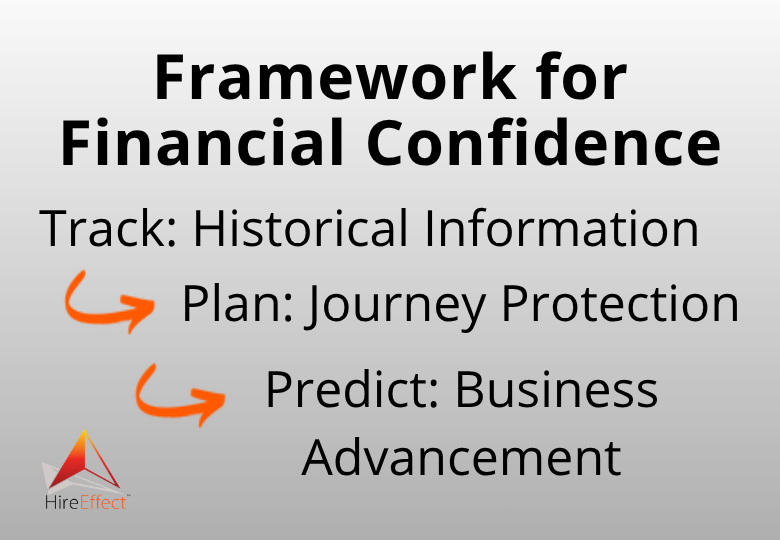
Forward-looking strategies come when you’re ready for them. We don’t skip the foundation to sell you the top layer because it wouldn’t work. And because we already run bookkeeping, payroll, and HR for the businesses we support, your financial oversight and your people-and-payroll compliance come from one team instead of two vendors pointing at each other. That’s a big part of why the value and math work in your favor.
If you want a straight read on what the right level looks like for your size and stage and what it would cost, reach out to our team, and we’ll walk you through it. No pressure and no jargon.
FAQ
How much does a fractional controller cost?
As a rough range, this kind of oversight runs a few thousand dollars a month, but a single number is misleading on its own. Good firms don’t price it by the hour. They value price, meaning a fixed fee agreed upon up front based on what reliable oversight is worth to your business. What determines that fee is the value at stake and the work behind it. Controllership is oversight of your books, so the price tracks the value it protects, not the hours it takes.
Why can’t I just hire a fractional controller on its own?
You can, but it often disappoints. A controller reviews and interprets your financials rather than building them from scratch. If your books aren’t current and reliable, the controller’s first job becomes cleanup, and you end up paying senior rates for foundational work. Controllership pays off when it sits on top of a solid, timely close.
How much does a fractional controller cost compared to a full-time controller?
A full-time corporate controller’s base pay runs around $82,000 at the midpoint in 2026, and fully loaded with benefits, payroll taxes, paid time off, and software, the real cost climbs past $150,000 a year. A fractional arrangement typically costs a fraction of that because you only pay for the oversight and value you truly need, not a full-time seat you may not be filling.
Does a fractional controller handle HR and payroll compliance too?
They can if they are trained in People Operations. But most fractional controllers focus on the finance side and leave HR and payroll compliance to a separate provider. That matters because worker classification, payroll tax, and wage and hour rules are financial risks that sit right next to the books. If you’d rather not stitch together two vendors, look for a provider that handles bookkeeping, payroll, and HR together, so the same team watches both.
What’s the difference between a fractional controller and a fractional CFO?
A controller focuses on reliable reporting, internal controls, compliance, and making sure the numbers are trustworthy. A CFO focuses on forward-looking strategy, fundraising, and long-range planning. Controllership generally comes first for owner-run businesses, with CFO-level advisory added once the fundamentals are solid.
Is a fractional controller worth the cost for a small business?
For many businesses that have outgrown basic bookkeeping, yes. The oversight is designed to prevent expensive surprises like missed filings, cash crunches, and payroll compliance penalties, and preventing even one of those often covers the annual cost several times over. The return comes from what it protects, not just the reports it produces.
One thought on “How Much Does a Fractional Controller Cost?”